2026 ABS Market Development Report
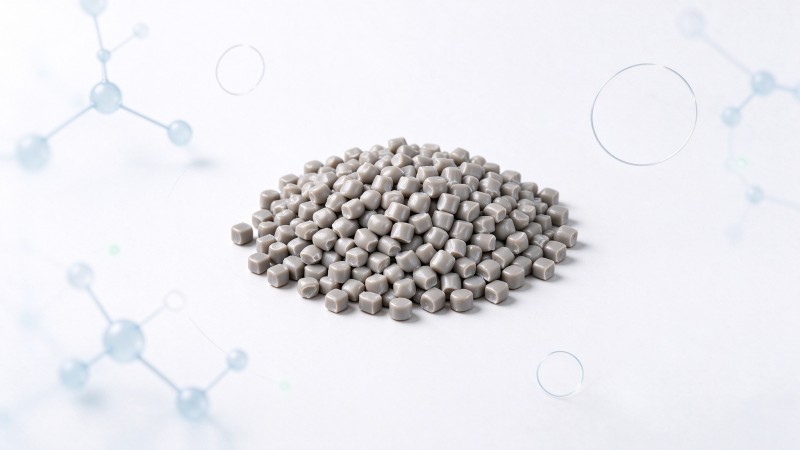
ABS is a widely used engineering plastic, mainly applied in electrical & electronic products, instruments, automobile manufacturing, office machinery and daily consumer goods. There are multiple ABS production processes. Current industrialized technologies include emulsion graft polymerization, emulsion graft blending and continuous bulk polymerization.
Global ABS Supply, Demand Analysis & Forecast
In 2025, global ABS capacity rose by 13.9% year-on-year and output increased by 14.3% year-on-year. The average plant operating rate stood at 64.3%, up 0.2 percentage points year-on-year.
Global ABS production is concentrated in Northeast Asia, Western Europe and Southeast Asia. In 2025, Northeast Asia accounted for 85.6% of global total ABS capacity, ranking first; Western Europe 4.1%; Southeast Asia 3.6%.
In 2025, there were more than 50 major global ABS manufacturers. The top ten producers held 75.7% of total global capacity. Chi Mei Corporation (Taiwan, China) is the world’s largest manufacturer with 14.5% of global capacity, followed by China National Petroleum Corporation and LG Group.
Global ABS consumption is mainly concentrated in Northeast Asia, North America and Southeast Asia. In 2025, Northeast Asia accounted for 76.5% of global ABS consumption, ranking first; North America 5.8%; Southeast Asia 5.1%.
In 2024, the total value of global ABS trade reached USD 6.54 billion, up 8.5% year-on-year, with total trade volume of 3.83 million tons, a year-on-year increase of 7.6%. The average global export price of ABS was USD 1706.6 per ton, rising by 0.9% year-on-year.
Major global ABS import sources are Chinese mainland, Malaysia and Vietnam, together accounting for approximately 39.1% of world total imports. Major ABS export sources are South Korea, Taiwan (China) and Malaysia, with combined exports making up around 56.1% of global total exports.
Global ABS capacity will keep expanding. New capacity additions in the next two years will mainly come from Northeast Asia. It is estimated that global ABS capacity will exceed 20 million tons per year by 2027.
China ABS Supply, Demand Status & Forecast
China’s ABS capacity maintains growth. By the end of 2025, China’s ABS capacity increased by 26.7% year-on-year and output rose by 19.6% year-on-year, with the annual average operating rate at about 60.5%.
By the end of 2025, China had 22 ABS manufacturers. New capacity in 2025 mainly came from CNPC Jilin Petrochemical, CNPC Daqing Petrochemical, Nanpao Chemical (Taixing), Shandong Yulong Petrochemical, Shandong Yike Chemical and Zhejiang Petrochemical. The top 3 producers by capacity in 2025 were Zhejiang Petrochemical, CNPC Jilin Petrochemical and Ningbo LG Yongxing Chemical. Their combined capacity accounted for 31.2% of China’s total capacity.
In 2025, China’s apparent consumption of ABS grew by 12.4% year-on-year; self-sufficiency rate reached 93.9%, rising by 5.6 percentage points year-on-year. Downstream ABS consumption is mainly in home appliances, transportation, light industry and office equipment. Home appliances remained the largest downstream sector in 2025, accounting for about 64% of total ABS consumption.
China is a net importer of ABS. In 2025, Chinese mainland imported 842,000 tons of ABS, down 17.2% year-on-year; exports hit 375,000 tons, up 72.8% year-on-year. Ordinary trade was the primary import mode, representing 65.7% of total imports, followed by processing trade with imported materials at 26.7%. ABS imports mainly originated from Taiwan (China), Malaysia and South Korea, which together accounted for 80.7% of mainland China’s ABS imports.
The growth rate of new ABS capacity in China will slow down. According to incomplete statistics, four new ABS plants are planned in China in the next two years, bringing 1.3 million tons per year of new capacity.
Excerpted from *Annual Report on China Petroleum and Chemical Bulk Products (2026 Edition)*
Disclaimer
This article is sourced from other media and does not represent the views or positions of this website.