
ABS Universe · Modification Technology
Chapter M3 covers glass fiber & mineral filled ABS, introducing filler functions, interfacial mechanism, rigidity-toughness balance, defects, processes and applications.
关注线缆材料、改性塑料、新能源材料与电子电气材料领域的产品进展、技术迭代与行业趋势。
.jpg)
This guide introduces plastic definition & categories, synthesis processes, common molding defects, and explains the 7 recycling resin codes marked on plastic containers.

Chapter M3 covers glass fiber & mineral filled ABS, introducing filler functions, interfacial mechanism, rigidity-toughness balance, defects, processes and applications.
.jpg)
This article summarizes properties of general, engineering and specialty plastics, introducing their advantages, drawbacks and applications. It offers material selection references based on strength, toughness, heat resistance and insulation.

The 2026 ABS market report covers ABS production technologies, global & domestic supply-demand data, capacity, output, trade and downstream consumption, and forecasts future capacity growth, excerpted from petrochemical bulk product annual report.

It introduces ten plastic performance tests, briefly describing principles for raw material inspection and formulation to identify material properties and avoid defects.

This introduction describes basic characteristics, classification and common applications of PP (Polypropylene), one of the most widely used general plastics.

This article thoroughly explains the five core injection molding parameters, their functions, interaction principles and defect troubleshooting, helping shift from trial-and-error adjustment to systematic process control.

No universal "best plastic", only the most suitable one. This guide shares 4 core selection questions, typical pitfalls and property trade-offs for 10 widely used thermoplastics.

Low-molecular additives may slowly migrate out from polymer matrix to material surface, causing oil exudation, bloom, haze or adhesion failure. This article explains the mechanism, controllable migration and troubleshooting methods.

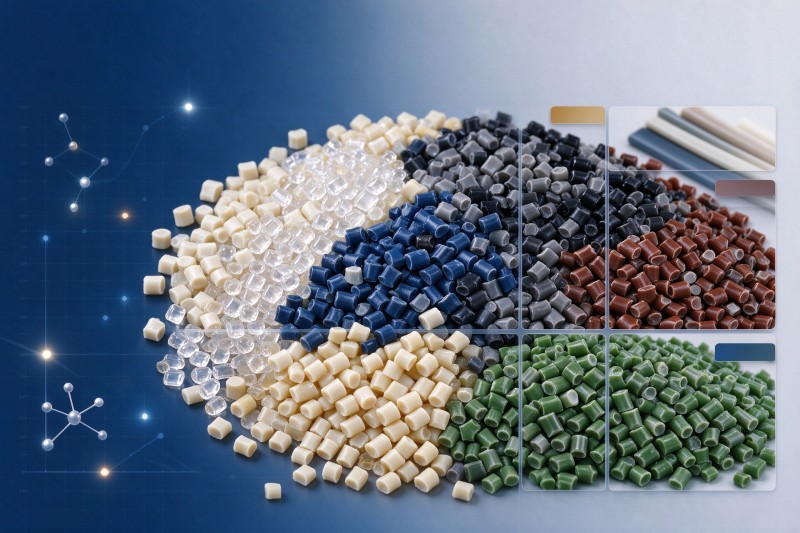
Modified plastics are produced by modifying general resins via physical, chemical and mechanical methods to add new functionalities, meeting special requirements on electrical, thermal, flame retardant and mechanical properties.

This article analyzes six common injection molding materials from basic properties and molding technology, helping you quickly master plastic material selection.
Describe your cable operating conditions: insulation/sheathing, continuous temperature resistance, oil resistance, flame retardant rating. Our engineers will match the optimal grade solution.
Reply within 1 working day, customer information strictly confidential